

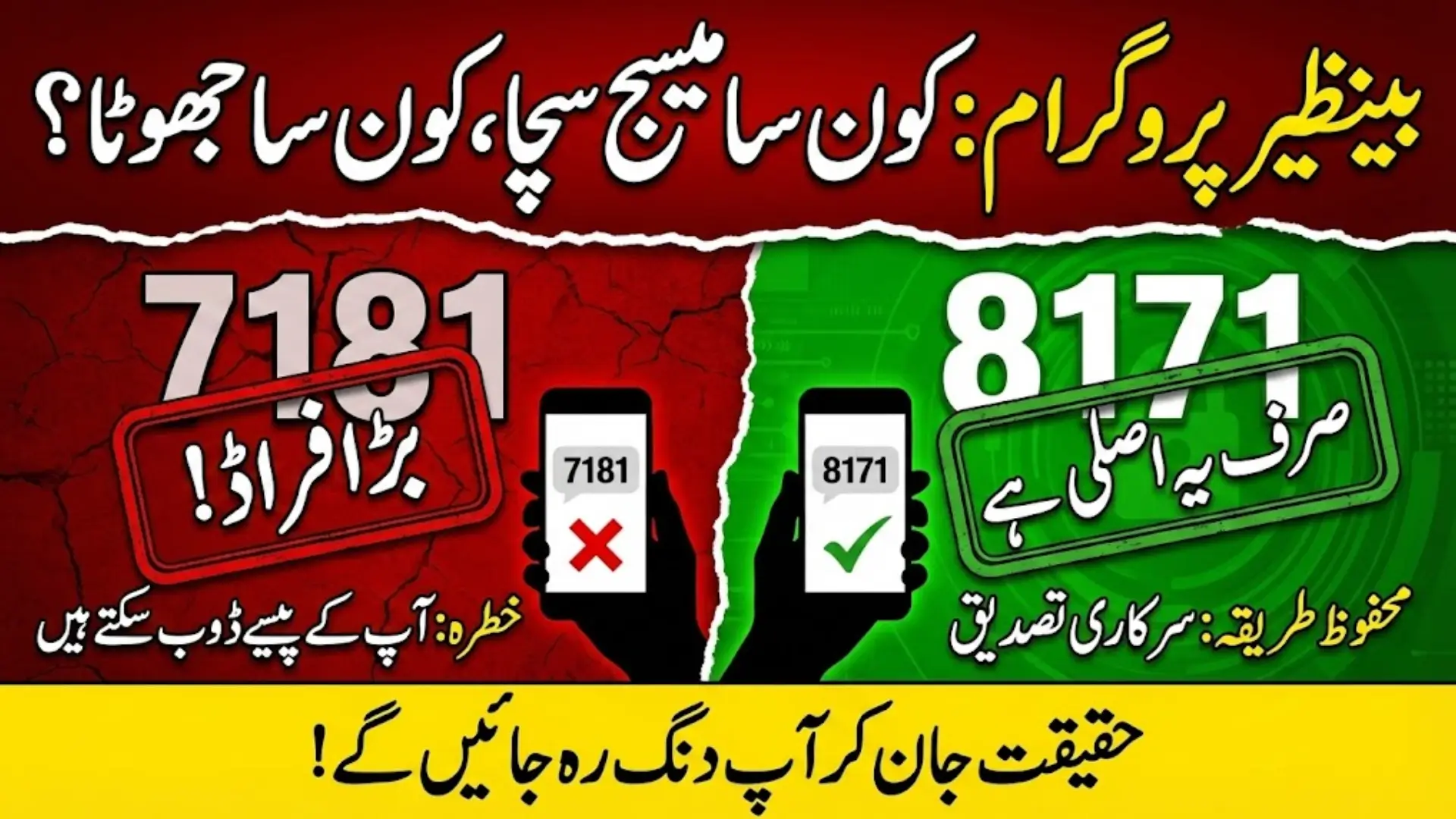
7181 BISP Real or Fake? Complete Verification Guide
The number 7181 has recently confused many families registered under the Benazir Income Support Program. Thousands of beneficiaries have reported receiving SMS messages from this number claiming to share payment updates, eligibility status, or survey instructions. Because these messages look similar to official BISP notifications, people often assume they are genuine.
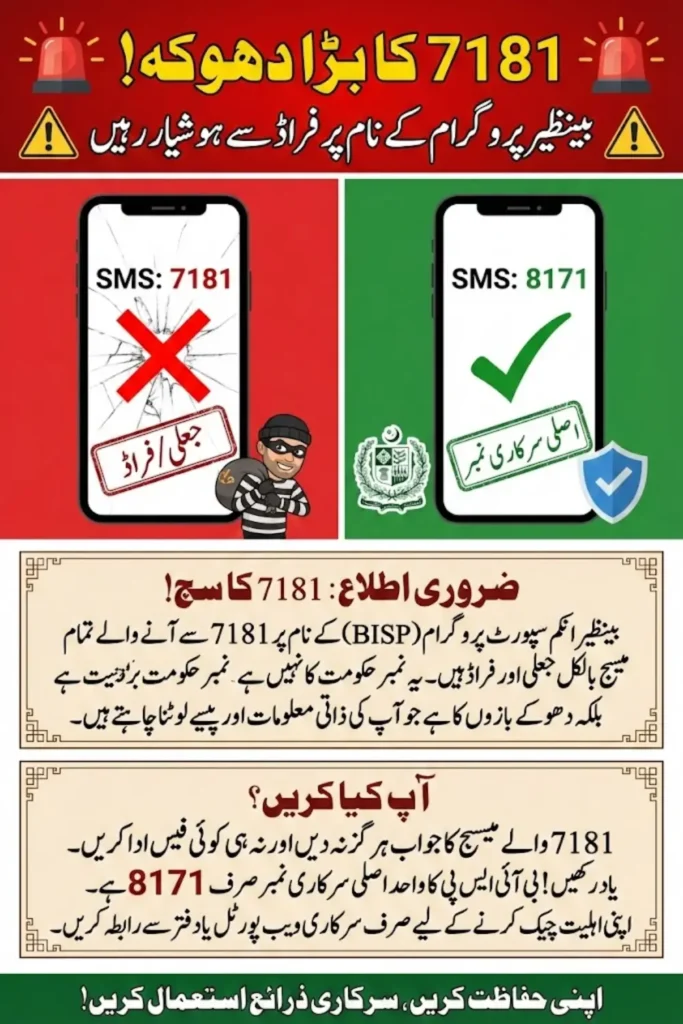
This article explains the reality behind 7181, how it differs from the official BISP communication system, and how beneficiaries can protect themselves from scams. It also guides readers on the correct and safe methods to verify their BISP status without risking personal data.
You Can Also Read: Punjab Private Schools Textbook Uniform Policy: Government Issues Strict Warning
What Is 7181 in BISP Messages?
The number 7181 appears misleading because it closely resembles the official BISP code 8171. Scammers intentionally use similar numbers to create trust and confusion, especially among people who are not familiar with official communication channels.
In reality, 7181 has no connection with the Benazir Income Support Program or the Government of Pakistan. Treat any message received from this number as suspicious and verify it through official sources before taking any action.
Common claims made by 7181 messages include:
- Payment release notifications
- Requests for CNIC details
- Survey update instructions
You Can Also Read: Saudi Arabia Ramadan Loudspeaker Ban Reaffirmed Ahead of Holy Month
7181 BISP Real or Fake – Official Confirmation
The most important clarification for beneficiaries is that 7181 is not an official BISP number. The government has clearly designated only one number for BISP-related communication, which is 8171.
Any SMS claiming to be from BISP but sent from 7181 is fake. Private marketing systems or fraud groups usually create these messages to exploit beneficiaries by collecting sensitive information.
Difference Between 7181 and Official BISP Number
Understanding the difference between fake and official numbers helps beneficiaries avoid scams. The official BISP system uses 8171 exclusively for all updates, while 7181 operates without authorization.
The table below highlights the key differences between the two numbers.
| Feature | 8171 (Official) | 7181 (Fake) |
|---|---|---|
| Government Approval | Yes | No |
| Payment Updates | Yes | No |
| CNIC Verification | Yes | No |
| Risk of Fraud | Very Low | High |
Why People Are Receiving SMS From 7181?
Many people receive messages from 7181 because scammers target vulnerable families who rely on BISP payments. These fraud attempts increase during payment cycles when beneficiaries are expecting updates.
These messages create urgency and sound convincing, often pushing recipients to act quickly. The senders use this pressure tactic to extract personal data or money.
Common reasons include:
- Fake payment release alerts
- False survey update requests
- Attempts to collect CNIC and contact details
You Can Also Read: Deepal S05 REEV Enters Delivery Phase as Pakistan’s First Locally Assembled
Examples of Fake 7181 SMS Scams
Fake messages sent from 7181 often follow similar patterns and wording. They may claim that payments have been released or that accounts need verification.
These messages never come from official BISP systems and should be ignored immediately to avoid data theft or financial loss.
Reported scam examples include:
- Requests to send CNIC via SMS
- Instructions to pay a fee to unlock payments
- Calls asking for bank or SIM information
How to Verify Whether a BISP SMS Is Genuine?
Before trusting any SMS related to BISP, beneficiaries should always verify its authenticity. The first step is checking the sender number, as BISP only uses 8171.
If there is any doubt, verification should be done through official platforms rather than replying to the message.
Safe verification methods include:
- Checking CNIC status on the 8171 web portal
- Visiting the nearest BISP Tehsil Office
- Ignoring links or callback numbers in SMS
You Can Also Read: BYD Atto 2 Limited-Time Offer Announced in Pakistan
How to Check BISP Eligibility Safely?
The safest way to check BISP eligibility is through the official 8171 web portal. This platform is directly linked with NADRA and the National Socio-Economic Registry, ensuring accurate results.
Beneficiaries only need their CNIC number and the security code shown on the website. No fees or agents are required for this process.
You Can Also Read: Pakistan Subsidy Reform Linked With BISP to Improve Targeting
Official BISP Services You Should Trust
BISP operates through a limited number of verified channels to ensure transparency and security. Any service outside these channels is unauthorized and unsafe.
Relying only on official platforms protects beneficiaries from scams and misinformation.
Authorized services include:
- 8171 SMS service
- Official 8171 web portal
- BISP Tehsil and Dynamic Survey Centers
Eligibility Criteria for Benazir Income Support Program
Eligibility for BISP is determined through the NSER survey and poverty score system. Only families meeting specific conditions qualify for financial assistance. Accurate CNIC records and updated household data play a critical role in eligibility decisions.
General eligibility requirements include:
- Poverty score below the official threshold
- Valid CNIC verified by NADRA
- No government employment or foreign travel record
You Can Also Read: NADRA Bug Bounty Challenge 2026 Launched to Strengthen National Cybersecurity
How Scammers Use 7181 to Cheat Beneficiaries?
Scammers use 7181 to impersonate government representatives and gain trust. Their main objective is to collect sensitive information that can be misused later. They often promise quick payment release or problem resolution in exchange for personal data or small fees.
Information commonly targeted includes:
- CNIC numbers
- Family and survey details
- Bank or mobile account information
You Can Also Read: UK Scholarships for International Students 2026: Undergraduate, Master’s, and PhD Opportunities
What To Do If You Receive a Message From 7181?
If you receive an SMS from 7181, the safest response is no response at all. Engaging with the sender can expose your personal data to misuse. Instead, beneficiaries should verify their status through official channels and report the message if necessary.
Recommended actions:
- Do not reply or share information
- Do not click any links
- Report the message to a BISP office
You Can Also Read: New PTA Tax for iPhone 14 in Pakistan Brings Lower Prices for Used Models
How To Protect Yourself From BISP Scams
Staying informed is the best protection against scams. Beneficiaries should remember that BISP services are always free and never require payments or personal data through SMS. Using only official platforms ensures security and peace of mind.
| Safety Measure | Benefit |
|---|---|
| Trust only 8171 | Avoids fake messages |
| Never share CNIC | Protects identity |
| No fees for BISP | Prevents financial loss |
| Visit official offices | Ensures accurate guidance |
Frequently Asked Questions (FAQs)
Is 7181 an official BISP number?
No, 7181 is not official. Only 8171 is authorized for BISP communication.
What should I do if I receive a message from 7181?
Ignore it and verify your status through the official 8171 web portal.
How can I safely check my BISP eligibility?
You can check eligibility by entering your CNIC on the official 8171 website.
Does BISP ever ask for money or fees?
No, all BISP services are completely free of cost.
How can I report a fake BISP message?
You can report it at your nearest BISP Tehsil Office for guidance.
You Can Also Read: GWM TANK 500 Delivery Schedule Updated in Pakistan
Conclusion
The number 7181 has no link to the Benazir Income Support Program and should not be trusted under any circumstances. The only official and government-approved number for BISP updates is 8171. Messages from any other number are likely attempts to scam beneficiaries.
By using official portals, protecting CNIC information, and avoiding unauthorized agents, beneficiaries can stay safe and ensure they receive their rightful support without risk.
You Can Also Read: 8171 CNIC Check Online 2026: Complete Guide to BISP Eligibility