


BISP Pakistan Subsidy Reform and Economic Stability
BISP Pakistan Subsidy Reform is entering a critical phase as the government moves to connect future electricity and gas subsidies with the Benazir Income Support Programme. According to the World Bank, this shift aims to improve targeting, reduce financial leakages, and ensure that public funds reach households that genuinely need support. The reform is part of a broader effort to strengthen economic resilience and control rising fiscal pressures.
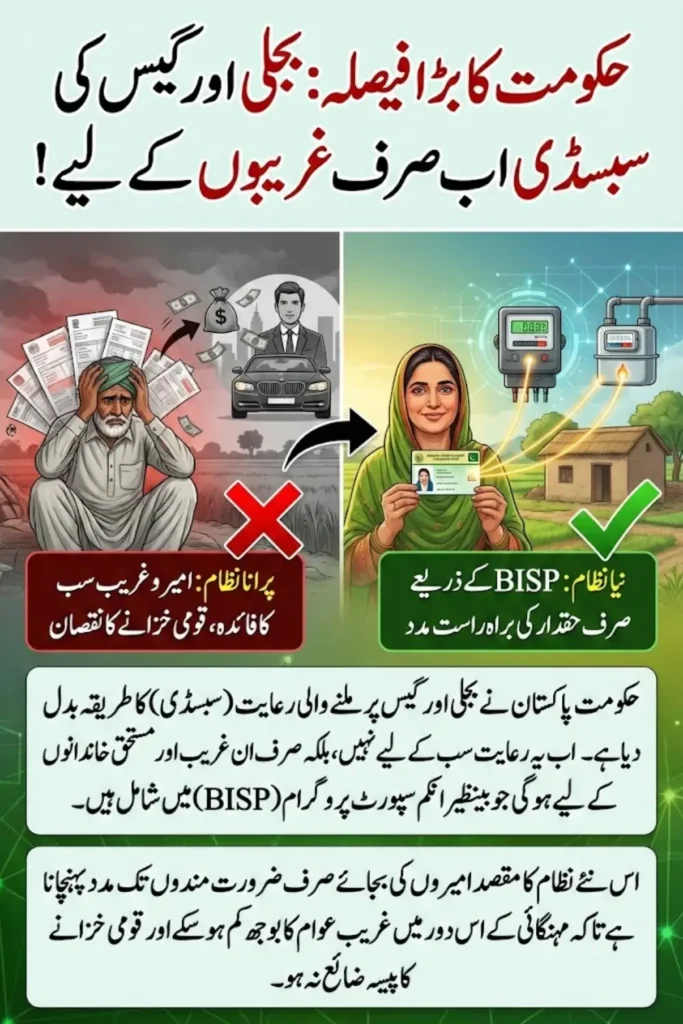
By linking subsidies with an existing social protection system, Pakistan Subsidy Reform is expected to change how welfare spending is distributed. Instead of broad, untargeted subsidies, assistance will be focused on low-income households, helping the government manage costs while protecting vulnerable communities from rising energy prices.
You Can Also Read: Pakistan Cricketers Ponzi Scheme Losses: Babar Azam and Other Players Reportedly Affected
Why Pakistan Subsidy Reform Became Necessary?
Pakistan Subsidy Reform was introduced in response to long-standing inefficiencies in the energy sector. Electricity and gas subsidies have historically benefited both rich and poor consumers, placing an unnecessary burden on public finances and contributing to the circular debt problem. The World Bank highlighted that fossil fuel subsidies in Pakistan are higher than in many regional countries, creating economic distortions.
These subsidies have also limited the government’s ability to invest in social protection and development projects. Redirecting these funds through Pakistan Subsidy Reform allows better use of limited resources and supports households facing economic and climate-related shocks.
Key challenges addressed by the reform include:
- Rising circular debt in the power sector
- Poor targeting of energy subsidies
- Limited fiscal space for social programmes
You Can Also Read: SBP Policy Rate Cut 2025 Likely as Analysts Predict 50bps Reduction
Linking Energy Subsidies With the Benazir Income Support Programme
A central feature of Pakistan Subsidy Reform is the alignment of electricity and gas subsidies with BISP. This approach ensures that energy support is provided only to eligible low-income households identified through a structured assessment system. The World Bank views this as a major step toward improving subsidy efficiency.
BISP already operates as Pakistan’s flagship social safety net, making it a logical platform for subsidy delivery. By using existing databases and digital payment systems, Pakistan Subsidy Reform reduces administrative costs and increases transparency in subsidy distribution.
Expected outcomes of this linkage include:
- Better identification of deserving households
- Reduced wastage of public funds
- Faster delivery of targeted assistance
You Can Also Read: NADRA Mobile Registration UK 2026 Announced for Overseas Pakistanis
How BISP Strengthens Pakistan Subsidy Reform?
The Benazir Income Support Programme plays a key role in making Pakistan Subsidy Reform effective. BISP uses proxy means testing to identify poor households and combines cash transfers with education and health-related incentives. This integrated approach helps reduce poverty while supporting long-term human capital development.
The World Bank noted that BISP has invested heavily in digital systems, making payments more accessible and responsive. These improvements allow Pakistan Subsidy Reform to rely on accurate data and real-time delivery mechanisms, reducing the risk of exclusion or misuse.
Main strengths of BISP include:
- Digital payment and registration systems
- Health and education-focused interventions
- Improved transparency and accountability
You Can Also Read: 8171 Ehsaas Rashan Riayat Program Registration Restored for Low-Income Families
Pakistan’s Social Protection System in Regional Context
Social protection systems in South Asia often lack dynamic inclusion mechanisms. However, Pakistan Subsidy Reform benefits from a well-developed social registry that allows households to self-register for assistance. The World Bank identified Pakistan as a regional exception alongside Maldives.
This strong foundation enables rapid expansion of support during crises. Pakistan Subsidy Reform builds on this system to ensure that subsidies can be scaled up or adjusted based on economic conditions, without creating long-term fiscal stress.
Regional comparison highlights:
- Pakistan has a centralized social registry
- Self-registration improves access for new beneficiaries
- Faster response during emergencies
You Can Also Read: China Investment in Pakistan Reaches $10 Billion with New Agreements
Emergency Cash Support During Covid-19
Pakistan Subsidy Reform draws lessons from the BISP emergency cash programme launched during the Covid-19 pandemic. The initiative used a fully automated and data-driven approach to deliver one-time financial assistance to nearly 12 million vulnerable families. The World Bank described it as a regional first.
This experience demonstrated Pakistan’s ability to use technology and data for large-scale social assistance. Incorporating similar systems into Pakistan Subsidy Reform improves crisis preparedness and ensures timely support during economic shocks.
Key features of the Covid-19 programme were:
- Automated eligibility verification
- Nationwide digital payments
- Rapid rollout during a national crisis
You Can Also Read: Punjab Development Program Faisalabad Division to Launch Nine Major Projects
Impact of Pakistan Subsidy Reform on Circular Debt
Circular debt has remained one of Pakistan’s most serious economic challenges. Pakistan Subsidy Reform aims to reduce this burden by cutting inefficient subsidies and improving cost recovery in the power sector. Targeted subsidies reduce pressure on government finances and energy companies.
By aligning subsidies with BISP, Pakistan Subsidy Reform ensures that financial support does not distort energy pricing for higher-income consumers. This creates a more sustainable energy sector while maintaining social protection for low-income households.
Table: Comparison of Subsidy Approach
| Aspect | Old Subsidy System | Pakistan Subsidy Reform |
|---|---|---|
| Targeting | Broad and untargeted | Income-based via BISP |
| Fiscal Impact | High and inefficient | Controlled and focused |
| Transparency | Limited | Data-driven and digital |
Water Stress and Agricultural Challenges
Beyond subsidies, the World Bank warned that Pakistan faces severe water stress. Groundwater levels are declining, particularly in lowland and plains areas, increasing the risk of droughts. Agriculture consumes over 90 percent of Pakistan’s freshwater resources, making efficient water use essential.
Inefficient irrigation practices and outdated farming techniques have reduced productivity, especially in Punjab. Addressing these challenges is critical for economic resilience, alongside Pakistan Subsidy Reform.
Major water-related risks include:
- Excessive groundwater extraction
- Climate-driven droughts
- Low irrigation efficiency
You Can Also Read: Punjab Private Schools Textbook Uniform Policy: Government Issues Strict Warning
Punjab Irrigated Agriculture Productivity Improvement Project
The World Bank-financed Punjab Irrigated Agriculture Productivity Improvement Project offers a successful model. The project focused on improving water channels, introducing high-efficiency irrigation systems, and promoting land leveling services. Rainwater harvesting ponds were also constructed to improve storage capacity.
These interventions complement broader reforms by strengthening agricultural resilience. While Pakistan Subsidy Reform addresses energy inefficiencies, projects like this help manage natural resources more effectively.
You Can Also Read: Saudi Arabia Ramadan Loudspeaker Ban Reaffirmed Ahead of Holy Month
Measured Results and Productivity Gains
The results of the Punjab project show clear benefits. Water losses were reduced significantly, and crop yields improved across several categories. These outcomes highlight the importance of targeted investment and efficient resource management.
Table: Key Outcomes of Punjab Agriculture Project
| Indicator | Improvement Achieved |
|---|---|
| Irrigation water losses | Reduced by 57% |
| Cereal crop yields | Increased by 14–31% |
| Water productivity | Improved by 9–45% |
Conclusion: Long-Term Benefits of Pakistan Subsidy Reform
Pakistan Subsidy Reform represents a shift toward smarter public spending. By linking energy subsidies with BISP, the government can protect vulnerable households while reducing inefficiencies and fiscal pressure. The World Bank views this approach as a foundation for stronger economic resilience.
Combined with improvements in social protection systems and resource management, Pakistan Subsidy Reform can support sustainable growth. Continued investment in data systems and funding arrangements will be essential to maintain momentum and respond effectively to future crises.
You Can Also Read: Deepal S05 REEV Enters Delivery Phase as Pakistan’s First Locally Assembled Range-Extended
FAQs
What is Pakistan Subsidy Reform?
Pakistan Subsidy Reform is a policy initiative to link electricity and gas subsidies with BISP so that support reaches low-income households more effectively.
How does BISP support subsidy targeting?
BISP uses proxy means testing and digital systems to identify eligible households, ensuring subsidies are delivered to those most in need.
Why is circular debt a major concern?
Circular debt strains the power sector and public finances. Pakistan Subsidy Reform helps reduce it by cutting inefficient and untargeted subsidies.
What role did BISP play during Covid-19?
BISP delivered emergency cash assistance to around 12 million families using an automated, data-driven system.
How is water management linked to economic resilience?
Efficient water use improves agricultural productivity and reduces vulnerability to climate shocks, supporting long-term economic stability.
You Can Also Read: BYD Atto 2 Limited-Time Offer Announced in Pakistan With Added Booking Benefits